Kelly and Angie Tagtow: Toward a Living Legacy
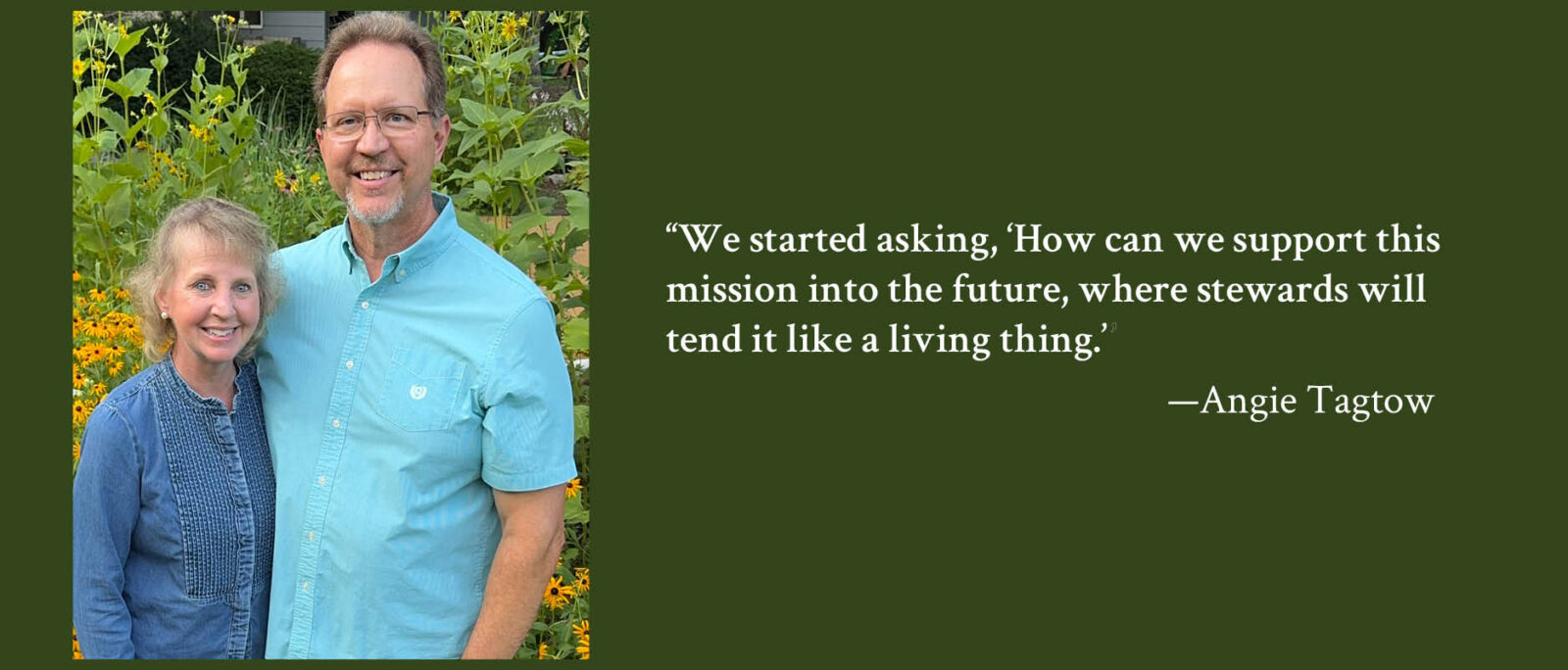
Like so many, Kelly and Angie Tagtow first connected with Seed Savers Exchange through the annual catalog (like this one!) but quickly progressed into lasting friendships with the people behind the mission, including Cindy Goodner, whom Kelly himself first hired when he worked as Seed Saver Exchange’s marketing director. Cindy now serves as director of development.
“Well, are you going to tell her?!” Angie said, nudging Kelly to spill the reason they’d asked Cindy to picnic with them one bluebird day this past spring, at the top of a hiking trail at Seed Savers Exchange’s Heritage Farm headquarters. Kelly was in the midst of explaining how they’re shaping their “second act” to live with intention—finding joy in cooking, growing some of their own food, and spending meaningful time with friends they love. He paused, smiled, and said, “We’ve updated our wills to make Seed Savers Exchange a beneficiary.” Angie nodded in firm agreement.
“Tears filled my eyes,” Cindy says of that moment, “not only because of the generosity of their decision but also because of its roots in their steady support—their philanthropy, their thoughtful introductions to others in their network, and their genuine care for the organization’s future.”
Planning a legacy gift was not a spontaneous gesture, Kelly went on to explain. In fact, it stemmed from decades of interaction with the organization and close observation of its growth.
“When we bought our property in northeast Polk County in 1994, we started experimenting with gardening—4-foot by 8-foot beds, then as naturally happens, up to 20-foot by 40-foot,” Kelly says, adding that both he and Angie grew up as country kids in active gardening families.
By 2002, they’d become more refined in their hunt for new additions to their land, which by then they were rewilding as native prairie and wetland, following Kelly’s completion of Iowa State Extension’s Master Conservationist program.
One auspicious summer day in 2011, Kelly returned to the Seed Savers Exchange website to purchase seed garlic when he noticed the organization was hiring a marketing manager. As a former database marketing analyst for Meredith Corporation (publisher of Better Homes and Gardens, Midwest Living, and more), he knew analytics better than seeds.
As it turned out, Seed Savers Exchange was looking for exactly Kelly’s take on data-driven outreach, which helped the nonprofit expand from marketing unique organic seeds to championing seed-heritage preservation and food-system biodiversity.
During that time, both Kelly and Angie were covering a lot of ground: Kelly lived during the week in the Decorah area, returning home to their acreage on weekends to tend their gardens and maintain their prairie. Applying her extensive experience in nutrition, public health, and food systems, Angie engaged with Luther College and the Northeast Iowa Food and Fitness Initiative until she accepted a post in Washington, D.C., as executive director of the USDA’s Center for Nutrition Policy and Promotion.
It was because of their crazy commutes that Kelly and Angie developed a funny and lasting connection with Seed Savers Exchange’s co-founder, Diane Ott Whealy. While walking on their property in Decorah, they noticed an orange tag on one of their conifer trees. They removed it, not knowing where it originated. A week or so later, they learned that Diane had “tagged” the tree as she had done on previous trips to the property, a former Christmas tree farm. Diane, who had long cut her own Christmas tree, had inadvertently found the “perfect” specimen a little over their property line.
“We still laugh about that when we catch up,” Angie explains, adding that they are regular attendees of the Seed Savers Exchange conference and fund-raising events and frequent visitors to Diane’s Garden at Heritage Farm. “Honestly, that firsthand connection to Diane’s passion and commitment to the mission is what got us thinking about including Seed Savers in our estate planning.”
Seed Savers Exchange’s endowed fund, established in commemoration of the nonprofit’s 50th anniversary in 2025, gave the Tagtows the confidence to put a legacy gift in writing. “We’re planners by nature,” Angie explains, “and we could see as the organization matured that it had not only evolved from its founding generations of leadership but was also thriving and positioned to endure. We started asking, ‘How can we support this mission into the future, where stewards will tend it like a living thing—adapting to challenges, growing when opportunities arise—with our gift doing the work we intended.’”
It took time, Kelly adds, for estate planning to feel natural to them emotionally, as well. “In our 40s we created our wills based on the many different connections we made during our 20s and 30s, but now, we’re interested in making our wills simpler for our executors and use beneficiary designations on other financial assets. We decided together which local organizations we wanted to include.”
They’ve simplified their gardens, too, moving toward perennials and long-season investments, like raspberries, blackberries, and apples, in addition to the hazelnut, native plum, and elderberry in their grove and windbreak. Oh, and garlic. They’re also still learning about prairie maintenance, trying new heirloom seeds, and preserving the harvest.
—Kristine Kopperud